
Why Group Acting Builds Friendships
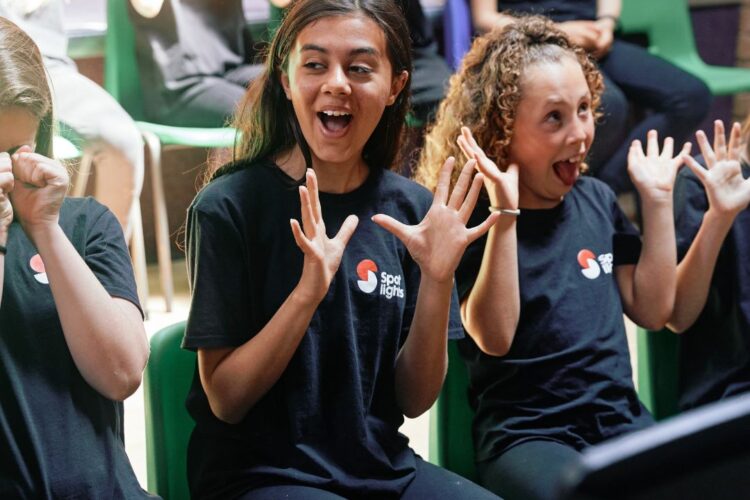
Picture a warm-up circle on a Saturday morning: up to 20 children, names already learned, eyes up, a silly vocal sound rippling round the room, then laughter when someone forgets whose turn it is. That tiny shared wobble is where trust starts. This is our everyday reality at Spotlights Theatre School, and it’s exactly why group acting builds friendships so quickly: the same faces every week, a shared goal to perform, playful vulnerability in rehearsal, creative expression in scenes and songs, and a collective achievement at the end of term.
If you’ve been wondering why group acting builds friendships, here’s our honest answer from the rehearsal floor.
Why Group Acting Builds Friendships Fastest
Friendships form fastest when young people see one another regularly, share a goal with clear steps, and feel safe enough to be a little silly together. Our musical theatre classes create that mix on purpose.
- Weekly sessions mean children keep seeing the same faces, and repetition builds familiarity and confidence.
- Small, structured groups help children feel safe to join in, because routines and expectations are clear from day one.
- Shared creative experiences give young people easy conversation starters and quick connections.
- Rehearsing towards a shared goal, an end-of-term performance, needs teamwork, active listening and problem solving together.
- Acting asks for playful vulnerability. You make bold choices, sometimes feel a bit silly, and learn to laugh and try again. That shared risk builds trust quickly.
- Listening for cues, emotion and breath is a core acting skill, and deep listening grows empathy.
Research backs this up. David and Roger Johnson’s decades of research on cooperative learning show that shared goals and interdependent roles strengthen peer relationships and psychological wellbeing, and more recent studies confirm cooperative learning reduces stress while improving how connected young people feel to their peers.
Studies of social synchrony also show that moving, speaking or singing in time together increases trust and social bonding, and musical theatre, where a whole cast sings, breathes and moves together, is synchrony in action.
Social confidence, in our language, is the ability to enter a group, listen, speak, take a small risk and stay engaged even after a mistake. Drama games like Zip Zap Zop and the “yes, and” rule build that trust fast, because everyone is included, errors are normal, and laughter is kind rather than cruel.
How Spotlights Theatre School Builds Lasting Friendships
Rehearsal creates repeated, positive contact, and performance delivers a genuine collective achievement. We design every session to make the most of both.
What happens in a Spotlights class:
- Small class sizes, with a maximum of 20 students per group, so every child is known by name and heard.
- A weekly structure across drama, singing and dance for children aged 4 to 18, so young people quickly feel where they fit.
- A term-long journey towards a group performance, so everyone contributes and everyone belongs.
Our STAR System is how we track confidence, communication, teamwork and stage skills, measured in small, concrete behaviours, like a clearer eye-line in a scene or a kinder note passed to a classmate after a run-through.
Regular performance opportunities each term mean the applause isn’t just noise; it’s peer and family recognition that cements a sense of belonging. We also run an in-house talent agency for current students at no extra cost, alongside specialist LAMDA coaching for students aged 7 and up who want to take their training further.
Families across Beckenham, Croydon, Orpington, Bromley and West Wickham train with us in age-banded groups, Little Stars for ages 4 to 7, Star 1 for ages 7 to 9, Star 2 for ages 10 to 12, and Star 3 for ages 13 to 18, so every child rehearses alongside peers at a similar stage.
Improv Class Or Scripted Scenes For A Shy Student
Many parents ask whether an improv class or scripted scene work suits a shy student better. For many children with social anxiety, improv accelerates social confidence first, because there are no lines to memorise and mistakes carry low stakes. You learn to say “yes, and,” to listen, to agree, to add: that is friendship in miniature.
Once that baseline confidence is set, scripted scene study deepens empathy and communication around a shared story: young actors ask why a character feels a certain way, then learn to respect the truth of that moment, while blocking and cue-sharing build precise communication and reliability between partners.
At Spotlights, we interleave improv within our drama blocks to warm the room, then move into scene work. Performing arts supports school learning, singing sessions reinforce listening and timing, and our dance sessions build spatial awareness and kindness in cues.
Our Weekly Class Flow, Step By Step
- Warm-ups build trust. We start with breath and body: gentle sirens, call-and-response rhythms, and quick movement games so children arrive in the room together, not just in the building.
- Rehearsal turns a shared goal into a daily habit. A table read aligns everyone on story and tone, blocking gives the room a sense of physical safety, and cue-and-response drills develop active listening.
- Constructive feedback protects confidence. We start with what worked, offer one improvement at a time, invite self-reflection, and end with a repeat run so effort becomes an immediate win.
- Performance and reflection cement belonging. Showcase moments run throughout the term, not only at the final show, and afterwards we reflect together on what we learned, who helped us, and what felt brave.
Teacher prompts we use to model empathy: “Tell me what your partner did that helped you today,” “What did you notice about the group’s timing?”, and “What’s one kind note you can give someone else?”
An Inclusive, Supportive Environment
Inclusion is built into how we run every class. Each group agrees simple, kind ground rules together, so everyone knows what to expect, and children of all abilities (including neurodiverse learners) are supported by clear structure, familiar routines and teachers who know them by name. Group acting is naturally inclusive: the story needs every voice, and drama games sharpen how children read and respond to each other, building a genuine sense of community across different backgrounds.
Contact Us
Helping One Child Make New Friends Quickly
A simple plan helps on day one: meet the teacher at the door, arrange a buddy pairing before the first game, and agree on a calm pick-up routine so parents can check in. At home, practise listening games at the dinner table, rehearse name recall as a memory game, and talk about feelings in small, real moments.
Progress we typically see: by week two, a new friend by name and more eye contact; by week four, volunteering in a game or giving a kind note to a peer; by show week, visible pride and a deeper sense of belonging.
Benefits That Carry Into School And Later Life
So why is performing arts important in children’s development? Acting classes develop communication, empathy, teamwork, focus, creativity and emotional resilience, skills that pay off well beyond the rehearsal room. A student who can speak a solo line to an audience is often the same student who can present in class without freezing, and belonging to a creative community protects self-esteem and gives young people a healthy outlet for emotional expression.
These outcomes are built into musical theatre specifically, because singing, dancing and acting demand cooperation and care every single week.
Acting Versus Other Group Activities For Friendship
| Activity | Best for making friends | Social skills strengthened | Pressure level | Shared goal clarity |
| Acting and musical theatre | High: frequent dialogue and ensemble interdependence | Communication, empathy, teamwork, resilience | Moderate, with mistakes normalised | Very clear: rehearsal to performance |
| Dance groups | Medium: fewer spoken interactions | Timing, focus, spatial awareness | Variable, technique-focused | Clear: recital or showcase |
| Music clubs | Medium: section-based collaboration | Listening, patience, cooperation | Low to medium | Clear: concert performance |
| Team sports | High: strong team identity | Cooperation, strategy, quick communication | Variable, competitive | Clear: match result |
Common Pitfalls And How Teachers Fix Them
Too little structure can slow friendship building, so we use clear games, defined roles and time limits. Over-focus on lead roles can leave others feeling sidelined, so we rotate parts and celebrate ensemble achievement. Feedback that stings can shut a child down, so we always use kind, specific feedback scripts.
Simple Ways For Young People To Engage And Make Friends
- Arrive early, learn two new names each session, and sit with a new group once a month.
- Volunteer for an improv game even if your voice shakes, that’s courage in practice.
- Give one peer a positive note after rehearsal.
- Try simple vocal warm-ups at home to keep your instrument ready for next week.
Next Steps With Spotlights Theatre School
For some children, arts classes become the highlight of the week. For others, they are simply the place where they quietly learn to speak up, make new friends and handle life’s ups and downs with a bit more ease. Our range of weekly classes and holiday workshops cater to children of all ages and skill levels, making it an inclusive and supportive environment for all.
Book your free trial or get in touch for more information!
FAQs
How do acting classes help children build life skills, not just performance skills?
Beyond the stage, children learn valuable life skills like listening, empathy, and working through a shared goal with others. These are the same skills that support them at school and later in life.
Are performing arts classes actually fun, or mostly hard work?
Both. Rehearsal has real focus and structure, but the shared experiences of games, songs, and getting a scene right together make it genuinely fun for most children.
Is it worth trying performing arts if my child already has other hobbies?
Yes. The friendships and confidence children learn through performing arts are hard to replicate elsewhere, making it a valuable addition even alongside sports or music.