
How Performing Arts Support School Learning
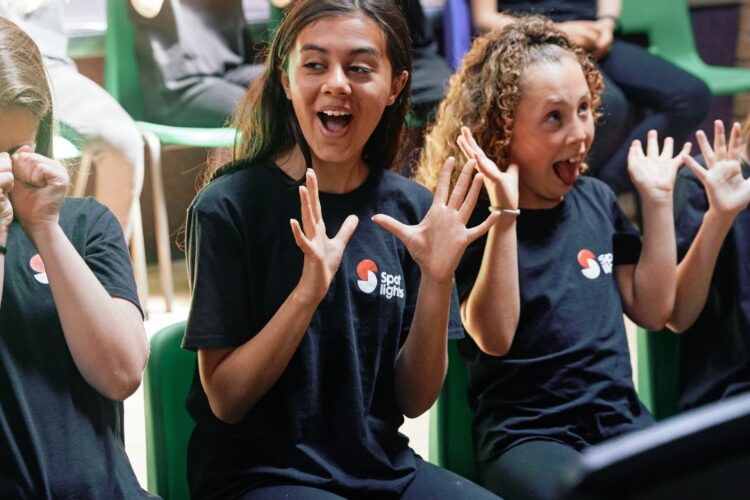
Picture a Year 7 pupil who never raises a hand in class. In our performing arts classes, she sings the opening line to a group number, shoulders back, eyes up, smile steady. The same week at school, she delivers a short science explanation without freezing. That jump is not magic. It is the result of structured rehearsal, ensemble habits and constructive feedback that build the skills classrooms demand.
This is how we design every term at Spotlights Theatre School, so the benefits of performing arts show up in schoolwork and wellbeing.
Performing Arts Boost Confidence, Communication and Critical Thinking
Performing arts classes give students a safe place to practise being seen and heard. On stage and in rehearsal, students develop self confidence and self esteem through clear routines, constructive feedback and repeated chances to get slightly braver each week. Drama, dance and music require students to listen, respond and make choices in real time, and that is where critical thinking grows.
It is widely recognised that arts education builds emotional intelligence and self awareness, and these capacities support academic performance. In Americans for the Arts research, around nine in ten adults agree that the arts are a vital part of a well-rounded education (Americans for the Arts, 2018). That public consensus aligns with what we see in our groups every term. When students learn to hold eye contact, speak on the beat, annotate a script and accept notes with a plan, their classroom talk, reading and creative writing improve too.
Arts integration matters. When teachers integrate arts with core subjects, children build durable links: counting bars in music maps onto fractions, analysing character motives supports inference in English, and blocking a scene strengthens the spatial awareness that helps with geometry. The transformative power of the arts reaches the whole child, supports fostering creativity, and builds a strong sense of belonging in the school community and the wider community.
The question for families looking for the best musical theatre school in London is simple: which programme turns confidence on stage into better learning on Monday morning?
Why Performing Arts Matter Families
Parents across Beckenham, Bromley, Croydon, Orpington and West Wickham tell us they want quality arts education that genuinely supports the school environment and school learning. We agree. There are many benefits, and our approach rests on four promises.
- Our STAR System builds confidence step by step, focusing on Self-confidence, Teamwork, Active learning and Realising potential.
- Small class sizes, capped at a maximum of 20 students, ensure personalised attention across age and year groups.
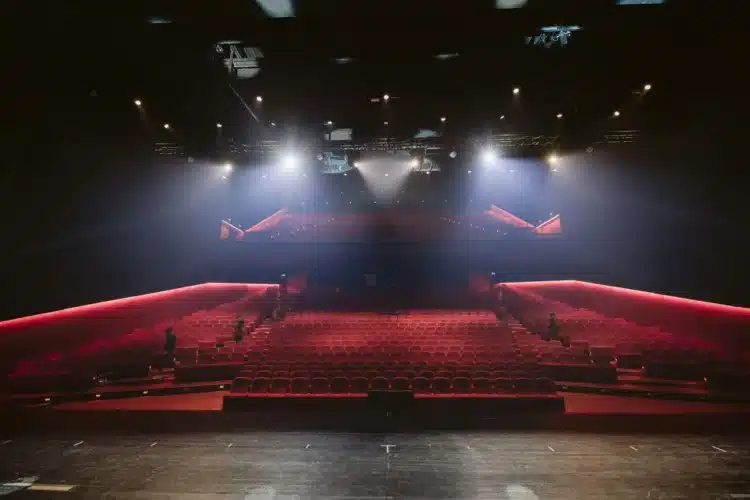
- Regular live performance opportunities each term help students practise under lights with costumes, a schedule and an audience.
- Our in-house talent agency is available to current students at no extra charge, alongside specialist LAMDA tuition for students aged 7 and above.
We offer drama, dance and singing classes for children aged 4 to 18, split into age bands: Little Stars for our youngest performers from age 4, and Stars 1, 2 and 3 for ages 7 to 18. So a parent searching for performing arts classes in London can expect the same reliability across Spotlights Beckenham, Bromley, Croydon, Orpington and West Wickham.
Communication and Confidence That Transfer to the Classroom
Drama, music and dance require students to project, articulate and listen actively. They practise eye contact, clear diction and natural movement every week, so a student who can present a scene will usually present a science method better too.
Ensemble work builds collaboration. Ensemble work only functions when students share ideas, accept constructive criticism and give constructive feedback with respect. In a devising task, students propose a movement pattern, hear suggestions to sharpen timing, and negotiate a final version. The outcome is not just a tighter performance. It is enhancing communication skills, stronger interpersonal skills and a strong sense of belonging that spills into group projects at school.
Role-play develops empathy. Role-play asks students to step into different perspectives and to practise emotional expression safely. A scene becomes a laboratory for tone, motive and choice. Back in class, that same student joins a debate with more self control and uses respectful talk in discussions.
Rehearsal builds stage presence. Rehearsal is where nerves turn into self confidence. We use simple rules: wait, listen, respect the performers, hear your note, and write one action to try. Over time this reduces anxiety and improves academic performance in oral tasks.
Creativity and Critical Thinking That Raise Academic Outcomes
Arts classes train problem solving, inference and cognitive flexibility, and those capacities map to better results in literacy, numeracy and science.
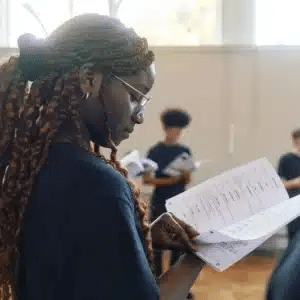
Script analysis sharpens inference and creative writing. When we annotate scripts, students learn to spot subtext, character motivation and theme. That mirrors reading at every key stage and into sixth form. We push further by setting short creative writing prompts from scenes to practise voice, imagery and structure.
Rhythm and meter strengthen working memory and maths. Clapping and stepping beat patterns build working memory. We show fractions and ratios using bars and counts in music education, turning abstract maths into timed movement students can feel.
Choreography builds spatial awareness. Mapping pathways on stage requires angles, shapes and spatial awareness. We draw ground plans, mark diagonals and talk about symmetry, and students carry that mental picture into geometry.
Devising develops problem solving. Devising tasks and music drama ask students to plan, iterate and think critically under time limits, feeding the intellectual curiosity that drives deeper learning. Reviews of large datasets find that students involved in the arts tend to score higher on both the verbal and mathematics sections of standardised tests than peers who take no arts courses, though researchers stress this is a correlation rather than proof of cause (ArtsEdSearch; Americans for the Arts research compendium). The point for us is not the exact number; it is that the creative decision making performing arts offer lifts academic outcomes and academic achievement.
Wellbeing, Emotional Intelligence and Personal Development
Taking part in performing arts provides a healthy outlet for emotions, reduces stress and builds emotional resilience. That supports mental health and personal development in and out of school.
Safe expression and positive risk-taking. Drama and dance let children try bolder choices in a safe frame for self expression. A shy young person may deliver a line angrily as a character and realise they can handle strong feelings without harm. That matters for helping children manage pressure and helps a child grow at a sustainable pace, and it is one of the ways performing arts help children learn to regulate emotion.
Reflection cultivates self awareness. We use short journals and debriefs. Students note one success, one wobble and one action. Over weeks, nerves shift into self esteem. They recognise patterns and plan changes, which is the core of self awareness.
Teamwork builds life skills that last. The collaborative nature of productions nurtures valuable life skills and transferable skills: time management, reliability and respect for roles. Parents often tell us anxiety drops and focus rises across the school day when young people have a creative outlet.
Evidence for Academic Performance and Attainment
Participation in arts education is associated with stronger academic performance, attendance and focus. Drama education in particular is linked with improved reading comprehension, writing skill and verbal test scores (Oregon Community Foundation review), while sustained involvement in music is highly correlated with success in mathematics (Americans for the Arts research compendium).
In the UK, the Artsmark award, delivered by Arts Council England, encourages schools to plan the arts strategically for academic attainment and a positive impact across the whole school (Arts Council England). Our takeaway at Spotlights is practical: design the timetable so rehearsals build stamina, assessments capture growth and families can see progress that matters in school.
How Spotlights Aligns With the School Day
Our approach to musical theatre for kids:
The STAR System and small classes. Our STAR System keeps every session focused on Self-confidence, Teamwork, Active learning and Realising potential. In small classes capped at 20, tutors tailor feedback to individuals and year groups. That is how quality education shows up consistently at a performing arts school.
Assessment and constructive feedback. We keep rehearsal notes and peer feedback sheets. Students understand the criteria for clear diction and ensemble timing, and they learn to receive constructive criticism and act on constructive feedback. Older students also prepare LAMDA pieces that stretch their academic attainment.
Extra curricular activities that support the whole school. Our weekend performing arts classes complement classroom learning and increase cultural capital. Students bring new vocabulary, stamina and poise back to their lessons.
Inclusion and reliability. We welcome neurodiverse students, EAL learners and those with additional needs. Clear communication with parents and reliable timetables mean families can plan with confidence.
Which Arts Classes Build Which Skills
Each modality builds overlapping yet distinct essential skills.
| Modality | Primary outcomes | Classroom transfer |
| Drama and improvisation | Communication skills, self confidence, emotional intelligence | Oral presentations, debates, creative writing |
| Music and singing | Working memory, focus, academic performance | Phonological awareness, patterns in maths |
| Dance and movement | Spatial awareness, self esteem, discipline | Geometry, PE links, focus |
| Visual arts links | Creativity, cultural appreciation, cultural capital | Science diagrams, design, STEAM |
| Music technology | Creative expression, executive function, digital literacy | Media projects, presentations |
Match your child’s current need to the primary outcomes. If self esteem and voice are the goals, start with drama. If working memory and focus need a lift, lean into music. If your child thrives on technology, music technology adds motivation. The skills developed in each row travel.
Simple Ways to Apply Performing Arts at Home
Small, regular arts activities reinforce essential skills without adding workload.
- Do a two-minute vocal warm-up before reading or assemblies.
- Try a family script read-aloud to build confidence and communication skills.
- Encourage a short reflective journal after big moments to grow self awareness.
- Choose one routine you can repeat three times a week, and celebrate effort.
Closing Thoughts
At Spotlights, we believe artistic pursuits should cultivate a lifelong love of learning. If you are exploring performing arts schools in London and want a programme that supports the whole school experience, come and see a session.
Here’s how it works:
- Little Stars (ages 4-7) and Stars 1, 2 and 3 (ages 7-18) keep children with others at a similar stage
- Little Stars sessions are one and a half hours and Stars 1,2,3 are three hours covering drama, dance and singing, taught by professional choreographers, drama coaches and singing teachers
- Classes are capped at 20, so your child actually gets attention rather than being lost in a massive group
- End-of-term shows with proper costumes, sound and lighting give them real performance opportunities. The whole family comes along and the pride on those kids’ faces is something else
You can sign up for a free trial class to test the water or have a look at our classes and see what fits your week. It costs nothing to try!
Book A Free Trial
Spotlights Performing Arts Classes
We have a range of dance, drama and singing classes for children ages 4-18 years.
Find the best performing arts class for your child!