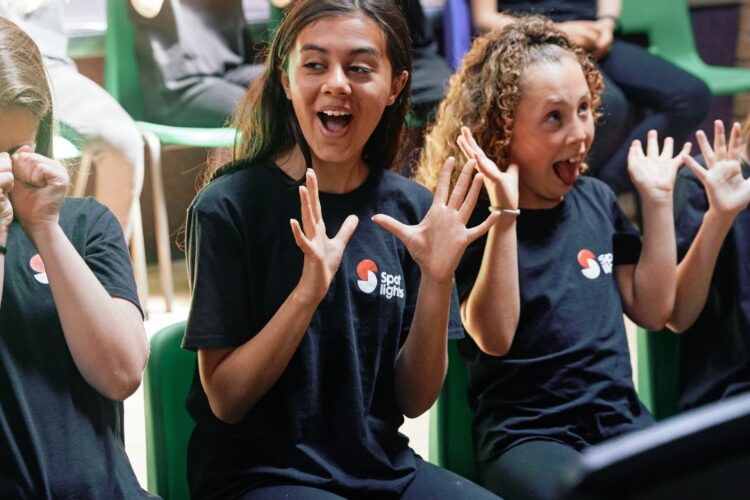


Spotlights Musical Theatre Classes in London: Complete Guide
Finding the right theatre class shouldn’t feel like a guessing game. At Spotlights Theatre School, families join us in real local studios across Beckenham, Bromley, West Wickham, Orpington and Croydon, all easy to reach from across London. Our musical theatre classes bring acting, singing and dance together into one exciting weekly session, led by experienced teachers who are actively working in the industry. It’s proper triple-threat training, with small class sizes (no more than 20) and a chance to perform at the end of every term.
We know starting something new can feel a bit daunting, for both kids and parents. But it doesn’t take long for that to turn into confidence.
So what actually happens in week one? And how does it all build from those first steps to a full performance on stage? Let’s take a look.
Spotlights Musical Theatre Classes Designed For London Families
Direct answer first. We deliver integrated acting, singing and dance training through structured weekly classes for ages 4 to 18. You do not need prior experience to join. Every term ends with a stage performance so students can put new skills to work.
At Spotlights Theatre School we define triple threat training as the three core disciplines for musical theatre for kids. Acting gives story and character, singing gives breath, pitch and emotional shape, and dance brings musicality, timing and stage presence. Our London studios run like working rehearsal rooms, with clear goals and time for fun as well as focus.
You are choosing between acting classes, singing classes and dance classes in many places. A performing arts school that integrates them saves you time and helps your child build performance skills with less friction. That is why we run weekly classes in local studios across the city and keep groups small. Our STAR System builds confidence, teamwork and technique in logical steps. We will show you exactly what happens in week 1 so your child walks in calm and ready to learn.
Spotlights Musical Theatre Classes: What Week 1 Really Looks Like
The aim in week 1 is simple. Beginner students start building confidence from the first session through clear routines, names to faces, and a small win they can take home.
In a typical first session you will see:
- Studio induction and safeguarding check
- A whole group physical and vocal warm up
- Short tasters of acting, singing and dance
- A simple ensemble routine that sets expectations for the term
Step 1: Check in, meet your tutors, and studio etiquette
You will meet the tutors at the studio door. We do a quick safety briefing, point out loos and water stations, and explain how we use the space. Students learn how to line up, listen for counts, and respect each other’s work. The tone is a supportive environment with clear boundaries. We want a nurturing environment that feels friendly but professional.
Step 2: Vocal warm up for kids and first singing lesson
We start with breath support and gentle vocal sirens to find speaking and singing voices safely. Then a short call and response using lyrics from a familiar musical. Older groups meet mix and belt basics, younger ones focus on pitch games and communication skills through lyrics. Everyone leaves humming something they can try again at home.
Step 3: Jazz and musical theatre foundations in the first dance class
Dance introductions cover posture, parallel position, simple jazz walks, and an eight count combination. Teens get guidance on footwear and where character shoes fit later in their journey. We set counts early so students learn to map music to movement cleanly.
Step 4: Acting through games, improvisation, and a short scene
Acting starts with fun drama games, then a quick improvisation in pairs, finishing with a short scene or tableau. We talk about what actors and directors look for on stage and how listening makes a scene land.
What your first class looks like
Every first session follows the same shape, whatever your child’s age:
- A warm welcome, a quick studio tour, and a chance to settle before anything begins
- A physical warm-up — through movement games for our youngest, something more structured for older students
- A vocal warm-up and a taster of a song
- Dance basics building towards a first combination
- Acting games that lead into a short scene
- An ensemble recap to finish, with time for questions and something to take home
- Our classes for ages 4–7 run for 90 minutes, while our 7–18 sessions are a full three hours, so there’s more room in the older classes to explore each part in depth and take a break partway through.
First week learning goals:
- Know your tutors’ names and the studio rules
- Warm up safely, and understanding why we do it
- Learn one short song section together
- Learn a basic jazz combination to counts
- Trying one acting game and speak a line clearly
Skills By Age Band: What Your Child Learns From 4 To 18
Children grow at different speeds. We group by age and stage so each child has the right stretch and the right support. They develop confidence, discipline, teamwork and the joy of performing.
Little Stars ages 4-7 (90 min class): Confidence, rhythm, and play-based stage skills
- Acting: listening games, clear stage directions, call and response stories
- Singing: simple melodies, lyric actions, vocal warm up for kids that feels like play
- Dance: gallops, claps, basic counts, moving in lines and circles
- Soft skills: sharing, turn taking, being brave enough to try
- Parents receive short notes after class with one thing to practise
Star 1 ages 7-9 (3 hour class): Ensemble singing, character, and storytelling on stage
- Acting: character clues, simple objectives, improvisation prompts
- Singing: group musical theatre songs for kids, acting through song basics
- Dance: jazz foundations, musicality, clean shapes
- Soft skills: communication skills, resilience, supporting the ensemble
- Audition awareness begins, including age appropriate audition songs for 12-year olds
Star 2 ages 10-12 and Star 3 ages 13-18 (3 hour class): Technique, small-group coaching, and performance polish
- Acting: scene study, truthful choices, on-camera awareness for film auditions
- Singing: range and registration work, ensemble blend, solo interpretation
- Dance: jazz progressions and clean ballet lines, spacing awareness
- Soft skills: leadership, self-management, professional etiquette
Outcomes matrix by band:
- 4 to 7: say a line clearly, sing a short chorus, move to counts, smile on stage
- 7 to 9: hold harmony in a group, sustain a character, remember blocking, hit the ending together
- 10 to 12 and 13 to 18: deliver a short monologue, sing with mix confidence, execute a clean combo, take and apply notes
We keep groups to a maximum of 20 so tutors can coach individuals. Our STAR System gives a pathway that is easy to follow and challenging to outgrow.
Acting, Singing, Dance Integrated: What Is Taught And Why It Works
We teach the three disciplines together because real theatre demands it. Workshops and weekly classes are led by working artists so students understand not just how to do it but why.
Acting For Musical Theatre
Acting for musical theatre is truthful storytelling under music.
- Scene study with simple objectives
- Improvisation to build spontaneity
- Acting through song to connect lyrics to action
- Stanislavski basics for playable actions
- Prepare for auditions with slates and sides
Singing Foundations
Singing foundations are healthy habits that free the voice to tell the story.
- Breath support and alignment
- Range and registration awareness
- Ensemble blend and listening
- Lyric clarity and phrasing
- Performance skills for presence and focus
- Health tips: warm down gently after singing, sip water, and rest when tired.
Dance Basics For The Stage
Dance for stage is musical precision that reads from the back row.
- Jazz technique including isolations
- Ballet placement for clean lines
- Stage spacing and traffic patterns
- Rhythm drills and counts
- Footwear guidance for teens
Weekly Classes, Holiday Workshops, And Intensive Training: How To Choose
You can shape training around your calendar. Choose between weekly classes, holiday workshops or short bursts of intensive training. Most schools offer all three.
Weekly Classes That Build Habit And Confidence
The same time, same studio each week. Skills stack predictably and the end-of-term performance keeps motivation high.
Holiday Workshops Led By West End Guests
One to five day sprints where students learn a show number with guests from the West End. Great for variety and a confidence boost.
Intensive Training For Ambition-Led Teens
Weekend or holiday blocks that focus on audition preparation and career development pathways. Small groups, targeted feedback.
Format comparison
| Format | Suitable ages | Time commitment per week | Focus areas | Typical outcomes | Led by | Performance opportunity |
| Weekly classes | 4 to 18 | 90 to 180 minutes | acting, singing, dance | steady progress, showcase | tutors and current industry professionals | end-of-term showcase |
| Holiday workshops | 7 to 18 | 1 to 5 full days | repertoire sprints | quick growth, new repertoire | West End guests, directors and choreographers | open class or showcase |
| Intensive training | 12 to 18 | weekend or holiday blocks | audition prep | mock auditions, feedback reports | tutors and visiting artists | mock audition or showcase |
What To Wear And Bring: Kit List, Character Shoes, And Studio Etiquette
Two simple kit lists.
Ages 4 to 7
- Water bottle plus small nut free snack
- Comfortable layers you can move in and your Spotlights T-shirt
- Soft jazz shoes
- Folder for scripts and music
Ages 7 to 18
- Water bottle and small nut free snack
- Fitted dancewear for clean lines
- Jazz shoes, and guidance on character shoes for teens when relevant
- Folder for scripts and music, pencil and highlighter
- Your Spotlight T-shirt
Studio etiquette
- Arrive on time and warm up properly
- Listen to teachers and respect the space
- Keep kit tidy and phones away
- Report any injury or soreness before class so we can adapt
Safety note: Warm up slowly, never force a stretch, and cool down before you leave. For voice, start light and low, and avoid shouting in noisy spaces after class.
Performance Opportunities Every Term, Plus Annual Highlights
Every term ends on stage. Students rehearse, space, take tech notes, add simple costumes,
For 4-7’s that includes a costumed show / mini musical. For 7-18’s students take part in a full musical theatre project performed in a theatre space with professional sound and lighting (spring term), open class (summer term), showcase (autumn term).
Pathways And Career Development From Beginner To Audition Ready
Our pathway combines the STAR System, in-house talent agency access for current students, and LAMDA support. If a teen wants to aim for college auditions, the best musical theatre schools in London and the broader top musical theatre schools uk list often include The BRIT School, Mountview, Urdang, and ArtsED, Bird College and Rose Bruford College . We can help a family map next steps and keep expectations grounded.
Screen awareness matters too. We cover how to audition for a movie as a child in simple steps, from slating to eyeline, and we coach acting through song alongside basic on-camera craft so students can adapt from stage to film.
A realistic 12 to 24 month timeline from beginner to audition ready
- Months 1 to 3: build weekly habits, keep a practice journal, learn one monologue and one chorus
- Months 4 to 6: join holiday workshops, add a second contrasting song, start light dance conditioning three times a week
- Months 7 to 12: perform solos in class, mock audition with feedback, record simple self tapes
- Months 13 to 18: refine two monologues, two songs, and a 60 second dance piece, attend open days
- Months 19 to 24: target applications or agency submissions with recent footage and tutor references
Monthly habits that help
- 2 hours of focused practice split across acting, singing and dance
- Watch a show once a term and discuss what you learned
- Keep repertoire notes and mark changes with your tutor
- Listen to original cast recordings and try new styles
Parent checklist
- Keep term dates visible at home
- Label kit and pack the folder the night before
- Film practice occasionally to track growth
- Ask your child to teach you one warm up
Closing Thoughts
At its core, musical theatre should feel exciting, supportive and rewarding from the very first class. That’s exactly what we aim to create at Spotlights Theatre School. With small groups, experienced industry teachers and the chance to perform every term, our musical theatre classes for kids in London give young performers the space to grow in confidence, skill and creativity. If your child is ready to give it a try, a free taster is the perfect place to start.
Book A Free Trial
FAQs
Do children need any experience to join?
No. Our musical theatre classes are open to beginners as well as children with previous acting, singing or dance experience.
What should my child bring to class?
A water bottle, comfortable clothes they can move in, and the right footwear for the session. We’ll share full kit details before their first class.
Is there a performance at the end of term?
Yes. Every term ends with a performance, giving students the chance to use what they’ve learned on stage in front of family and friends.
Spotlights Performing Arts Classes
We have a range of dance, drama and singing classes for children ages 4-18 years.
Find the best performing arts class for your child!