
The Role of Music in Child Development
Ladies and gentlemen, welcome to the grand stage where the role of music in child development takes the spotlight! At Spotlights Theatre School, we know that music is not just the understudy in a child’s growth; it’s the star of the show. From enhancing cognitive abilities to nurturing emotional well-being, music plays a leading role in the grand performance of child development.
So, grab your front-row seats as we explore how music sets the stage for a child’s holistic growth, incorporating elements of music education and musical activities.
Music and Cognitive Development: A Symphony of the Mind
Cue the orchestra! Music is a maestro when it comes to cognitive development. Research has shown that engaging with music can boost a child’s cognitive functions, including memory, concentration, and even brain plasticity. Imagine learning multiplication tables through a catchy tune, it’s like a musical rehearsal for the mind! The importance of music in developing cognitive skills cannot be overstated.
- Enhances Memory Retention: Rhythmic patterns in music act like a script for the brain, helping children remember information more effectively. Who knew a song could be the perfect memory coach?
- Boosts Concentration and Focus: Just like rehearsing for a big performance, listening to and playing music requires focus, which translates to improved concentration in academic settings.
- Supports Brain Plasticity: The encore? Music engagement enhances brain plasticity, allowing for quicker and more efficient information processing. The cognitive performance from singing lessons is vital in the early years of a child’s development.
Research by the University of Southern California’s Brain and Creativity Institute found that musical training can accelerate brain development, particularly in areas related to language and reading skills. So, let the curtain rise on your child’s cognitive growth with the power of music!
Musical Theatre Classes for Kids
Emotional Development and Music: The Heartfelt Ballad
In the emotional theatre of life, music is the ultimate ballad, providing children with a safe space to explore and manage their emotions. Whether it’s a dramatic crescendo or a soothing lullaby, music helps children articulate feelings they might not yet have the words to express, enhancing their emotional intelligence and self-expression.
- Provides Emotional Expression: Through music, children can express complex emotions without uttering a single line. It’s like having a backstage pass to their inner world.
- Reduces Stress and Anxiety: Studies have shown that listening to music can lower cortisol levels, reducing stress and anxiety in children. A simple calming tune can work wonders for emotional regulation.
- Encourages Emotional Well-being: Regular musical engagement can enhance mood and promote resilience, equipping children with emotional tools to handle life’s challenges. Music stimulates emotional growth and emotional awareness.
So, let music take the lead in your child’s emotional development, ensuring they hit all the right notes and develop strong emotional regulation skills!
Language Acquisition through Music: The Linguistic Overture
Roll out the red carpet for language skills, as music plays a pivotal role in enhancing auditory processing and communication. Just like a well-rehearsed script, music introduces children to new words and phrases, expanding their vocabulary through catchy tunes. Music strengthens language development and language acquisition.
- Enhances Vocabulary: Songs serve as the perfect dialogue coach, introducing children to new words and phrases. Nursery rhymes and call-and-response songs are particularly effective in this regard.
- Improves Auditory Discrimination: Music training helps children discern different sounds and pitches, a skill vital for language comprehension. Auditory discrimination is essential for early reading skills.
- Supports Verbal Expression: Singing and musical activities encourage children to use language creatively, enhancing their verbal communication skills.
Social Skills and Music: The Ensemble Cast
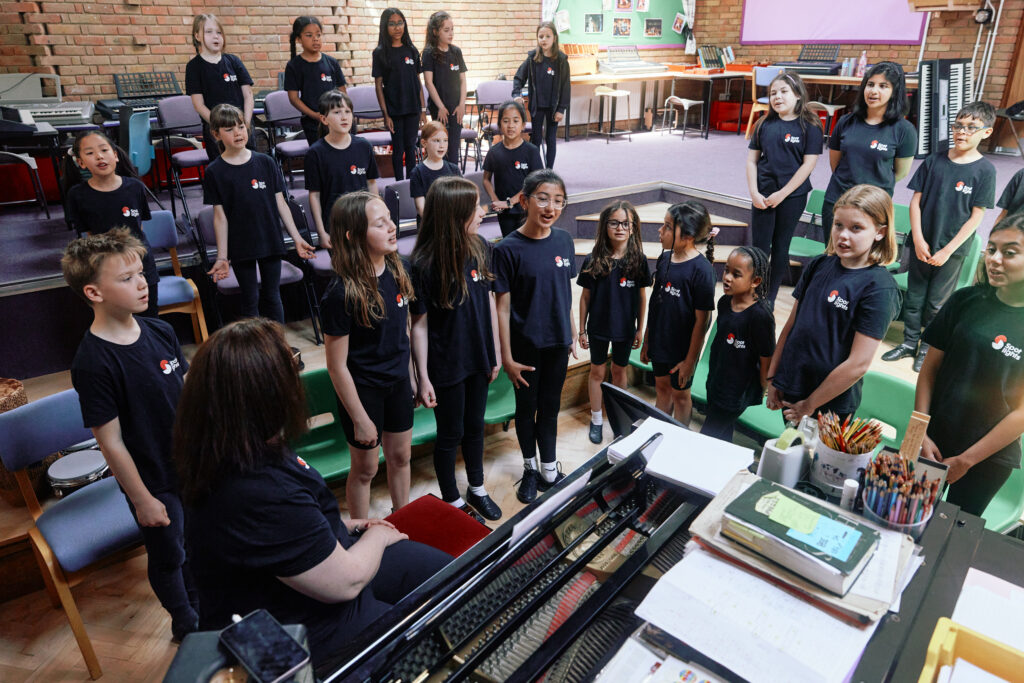
In the grand production of social development, music is the ensemble cast, fostering interaction and collaboration among children. Whether it’s a group performance or a family sing-along, music brings people together, enhancing social skills in a supportive environment. Musical theatre school for kids is invaluable for social growth.
- Encourages Teamwork: Group performances and musical ensembles teach children the importance of working together towards a common goal. It’s like the ultimate team-building exercise!
- Improves Communication and Listening: Participating in music requires active listening and communication, skills that are transferable to other social interactions. Developing listening skills is crucial for social interactions.
- Strengthens Bonds: Shared musical experiences can strengthen relationships, creating harmony both on and off stage. Social development through music is a key benefit.
Music therapist Dr. Petra Kern emphasises the social benefits of music, noting its ability to bring people together and foster a sense of community. So, let music be the director of your child’s social development, ensuring they shine in every scene and develop strong social skills!
Book A Free Trial
Motor Skills and Physical Development: The Dance of Dexterity
And now, the grand finale! Music is the choreographer of physical development, boosting motor skills and coordination in children. The benefits of dance or playing an instrument includes encouraging movement and therefore promoting overall physical growth. Playing instruments like percussion instruments can enhance both gross motor skills and fine motor skills.
- Improves Coordination: Dancing to music or playing an instrument requires precise timing and coordination, enhancing a child’s physical abilities. Musical experiences in early childhood are crucial for motor skills development.
- Enhances Fine Motor Skills: Playing instruments like the piano or violin involves intricate finger movements, improving fine motor control. Even homemade instruments made from everyday objects can support this development.
Comparative Table: Benefits of Music in Child Development
| Aspect of Development | Benefits of Music |
| Cognitive Development | Enhances memory, boosts concentration, supports brain plasticity |
| Emotional Development | Provides emotional expression, reduces stress, encourages well-being |
| Language Acquisition | Enhances vocabulary, improves auditory discrimination, supports verbal expression |
| Social Skills | Encourages teamwork, improves communication, strengthens bonds |
| Motor Skills | Improves coordination, enhances fine motor skills |
Summary and Curtain Call
As the curtain falls on our exploration of the role of music in child development, we see that music is not just a supporting act but the star of the show. At Spotlights Theatre School, we integrate these benefits into our curriculum to nurture and develop young minds, encouraging children to participate in musical engagement from an early age.
- Cognitive Enhancement: Musical activities improve memory, concentration, and brain plasticity, fostering cognitive growth. The cognitive benefits of music are profound.
- Emotional Growth: Music provides an outlet for emotional expression, reduces stress, and enhances emotional well-being. It supports emotional development and emotional well-being.
- Language Skills: Through music, children expand their vocabulary and improve auditory discrimination and verbal expression. Music activities can significantly support language development.
- Social Interaction: Music fosters teamwork, communication, and strengthens social bonds. Cultural awareness is also enhanced through exposure to various musical styles.
- Physical Development: Music aids in improving coordination and fine motor skills through rhythmic movement and instrument play. Spatial awareness is improved through music making.
Looking for Musical Theatre Classes for Kids in London?
Children’s performing arts training isn’t just the rehearsal before “showtime.” It’s a pathway to confidence, skills, new friends, and pure joy.
If your child is ready to take their next step, why not explore the Spotlights Theatre School performing arts classes? Whether they’re curious about musical theatre or just want to make new friends and have fun, Spotlights offers a warm, welcoming environment where confidence takes centre stage.
Book your free trial or get in touch for more information!
FAQs
1. Why is music important in early childhood education?
Music is a cornerstone of early childhood education because it stimulates multiple areas of the developing brain simultaneously. Incorporating rhythm, melody, and movement helps children learn patterns, improve memory, and build concentration skills that support overall early childhood development. At Spotlights Theatre School, we use music to make learning active, engaging, and joyful for our young performers.
2. How can parents incorporate music into the daily routine of very young children?
You don’t need a stage or professional instruments to incorporate music into your child’s life! Singing nursery rhymes during playtime, dancing to favourite tunes, or even clapping to the beat can nurture rhythm, listening, and coordination skills. For very young children, these musical moments create joyful habits that build confidence and self-expression from the earliest age.
3. What are the benefits of music classes for young children?
Young children who take part in music or theatre classes develop essential life skills — from teamwork and communication to emotional awareness and self-discipline. Music classes also reinforce early childhood development by strengthening cognition, language, and motor coordination. At Spotlights Theatre School, each session gives children the opportunity to shine on stage.
Spotlights Performing Arts Classes
We have a range of dance, drama and singing classes for children ages 4-18 years.
Find the best performing arts class for your child!