

Using Imagination in Acting For Kids
At Spotlights Theatre School, imagination in acting is the first place we start when a child joins our classes.
We see, week after week, how an actor’s imagination turns a quiet person into a confident character on stage. A child who sits at the back of the room at the beginning of term can, by the end, create a performance that feels full of emotions, story and truth.
Imagination is not a bonus. It plays a vital role in the actor’s craft for human beings of all ages, especially children discovering stage acting for the first time.
In this blog, we explore:
- How imagination supports acting and character work for kids
- Why musical theatre stretches an actor’s imagination further
- How imagination, play and practice build confidence and life skills
- The specific exercises we use at Spotlights to develop creativity
- Why combining imagination and memorisation produces convincing lines and scenes
What Role Does Imagination Play in Acting for Kids?
Imagination is the foundation of character portrayal. It lets a child step into someone else’s shoes, feel new emotions and see the world through a character’s eyes.
When children imagine, they can:
- Explore the inner world of a character
- Connect with big emotions in a safe, playful way
- Discover different perspectives and making a character their own
In acting, imagination helps a young actor:
- Observe other actors and learn from their choices
- Focus on what is happening in the scene instead of worrying about fear or mistakes
- Portray fiction in a way that feels close to reality for the audience
For us at Spotlights, imagination is the first step in helping children:
- Create ideas for how a character moves, speaks and reacts
- Join in ensemble work practice without needing a perfect script
- Develop familiarity and access to their own creativity, body and voice
Imagination, play and child development
Research into pretend play shows that imaginative play is crucial for children’s development. It supports:
- Empathy and perspective
Children learn to see from another person’s point of view and understand different emotions, which is important for relationships and social success in later life. - Self regulation and emotional control
Imaginative scenes give children a free, safe space to explore feelings like fear, joy and frustration. They practise calming down, thinking and responding in a considered way. - Creativity, language and writing
Working with story, play and words helps children develop creativity and language skills, which supports reading and writing at school as well as performance on stage.
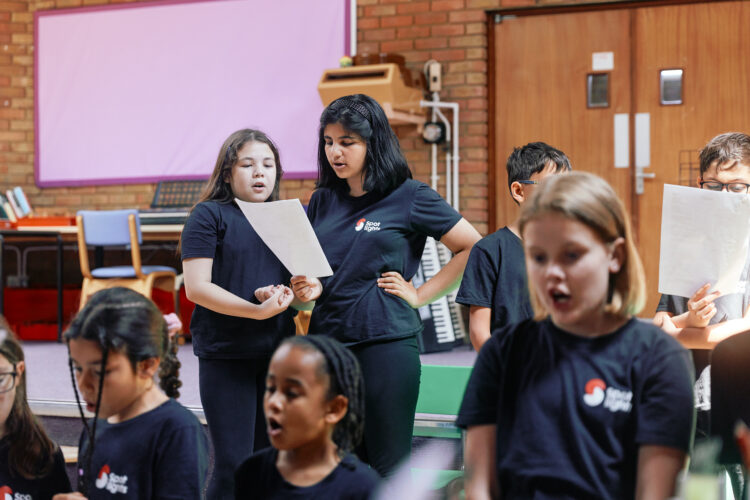
At Spotlights, our musical theatre classes are for children aged 4 to 18, split between Little Stars and Stars 1, 2 and 3 so that each child learns in an age appropriate group. Imagination is the key that opens the world of acting to them and helps them connect with others on stage.
Why Imagination Matters More in Musical Theatre Than Straight Acting
Musical theatre blends three disciplines:
- Acting
- Singing
- Dance
This combination turns imagination into daily practice. Children use their head, body and voice together, which makes musical theatre a powerful art for developing creativity.
How imagination works in each discipline
- Acting
Children imagine the character’s past, profession and relationships. They build scenes where they decide how the character feels in each moment and how to portray that on stage. - Singing
They imagine the emotion behind the lyrics and the importance of each word. This helps them sound inspired and enthusiastic, not just accurate. The sound carries the story to the audience. - Dance
They imagine the world of the choreography. Movement becomes a way to explore mood, wonder and story without needing long lines of dialogue.
Acting teachers and performance coaches often describe imagination as a crucial part of stage acting, helping actors create truthful moments out of written lines and rehearsed practice. When children work across all three disciplines, they discover how flexible and powerful their imagination can be.
How Does Imagination Build Confidence in Young Performers?
Imaginative exercises let children take risks in front of others without real world consequences. They can try bold choices in a scene, then adjust and try again.
In Spotlights classes, imagination helps children:
- Free themselves from fear of getting things wrong
- Focus on the process of acting instead of the pressure of performance
- Explore different perspectives on how a character might move, think or feel
- Build confidence through drama and acting
The STAR System and Self Confidence
Self Confidence is one of the four pillars in our STAR System. It is closely tied to imaginative work in small, supportive groups.
At Spotlights:
- Class sizes are kept to a maximum of 20
- Students work with familiar teachers who observe, guide and encourage them
- Children receive regular feedback that highlights their strengths and next steps
This structure helps children:
- Develop a strong stage presence and body awareness
- Use their voice clearly and confidently
- Build trust in their own ability to create convincing performances
Performing becomes fun rather than frightening. Children discover that they can join in, connect with other actors and stand in front of an audience with growing confidence.
Teamwork and Imagination: Performing Together
Teamwork is another pillar of our STAR System. Imagination, in a group, teaches children how to:
- Share ideas for scenes and stories
- Listen to other actors and respond in the moment
- Build art together rather than alone
A simple example in class:
- We place a box or another everyday object in the middle of the space.
- A small group is asked to explore different ways that object could be used in a scene.
- They decide who each person will play and what happens next.
Very quickly, the box might become:
- A treasure chest in a pirate story
- A suitcase for a character deciding to leave home
- A stage prop that supports an emotional goodbye scene
Through this process, children:
- Practise cooperation and communication
- Learn the importance of each person’s perspective
- Understand that good acting is often about connecting with other actors, not staying in their own head.
Drama teaches teamwork by making collaborative imagination a regular part of our exercises and practice.
What Are the Best Imagination Exercises for Kids in Acting Classes?
Parents often search for drama games, acting exercises and improv practice that build imagination. At Spotlights, we use specific methods to help children access creativity and develop reliable performance habits.
Core imagination exercises we use
- Character walks
- Children imagine how a character would walk through the world.
- They explore posture, pace and body language.
- This is often the first step in discovering how a character feels in different moments.
- Object transformation
- An everyday object becomes something new in a scene.
- A chair turns into a throne, a book becomes a magic page, a toy becomes a royal crown.
- Children explore reality and fiction and learn how imagination can transform simple props.
- Emotion freeze
- Children move around the stage, then freeze when a teacher calls out an emotion.
- They use their whole body to portray joy, sadness, fear or wonder.
- This builds emotional truth and clarity in performance.
- Story circle
- Students sit or stand in a circle.
- Each adds one sentence to a shared story.
- They practise reading the room, listening to others and keeping focus on the scene as it develops.
- Sensory recall
- Children imagine sounds, smells or tastes from past moments in their life.
- They use these to deepen scenes, for example the sound of rain at night or the smell of popcorn in a theatre.
- This strengthens their ability to imagine detailed worlds and connect emotionally with a character.
These exercises turn imagination into regular practice. They help children:
- Build familiarity with acting tools
- Access creativity faster during rehearsals
- Explore art as something structured and playful at the same time.
How Spotlights Uses Active Learning to Develop Imagination
Active Learning is where imagination meets technique in our STAR System. Each week, children take part in exercises designed to develop:
- Coordination and flexibility
- Communication and vocal projection
- Stage presence, sound and performance
Imaginative work is built into this process. For example:
- Character walks blend creative ideas with physical discipline.
- Emotion freeze connects feelings, body and voice so children learn to portray emotions convincingly.
- Story circles and group improvisation help them explore process and perspective while practicing stage skills.
We treat imagination as part of daily practice rather than a one off activity. Over time, children become more familiar with acting routines and more able to imagine, explore and create in front of others.
Imagination vs Memorisation: Comparing Approaches to Acting for Kids
Good acting is not only about knowing lines. It is about accessing imagination and portraying truth on stage. At Spotlights, we combine imagination based training with memorisation to support both creativity and accuracy.
Why a combined approach works best
Imagination helps children:
- Explore a character’s inner world
- Connect with emotions and motivations
- Make choices that feel inspired and natural
Memorisation helps them:
- Learn script lines word for word
- Stay in time with other actors
- Keep scenes structured and professional
Here is how the different approaches compare.
| Approach | Focus | Benefit for kids | Example in class |
| Imagination based training | Feeling and motivation behind lines | Builds emotional range, creativity and confidence | Character walks, sensory recall, improvisation |
| Rote memorisation | Word for word script recall | Ensures accuracy for exams or scripted shows | Learning lines for a school play or termly production |
| Combined approach (used by Spotlights) | Emotional truth plus script accuracy | Produces convincing performances ready for LAMDA exams and shows | STAR System classes blending exercises, scene work and script reading |
In rehearsal, we might:
- Ask students to imagine the character’s past and profession.
- Explore scenes through improvised dialogue.
- Then practise precise script reading to fix words and timing.
This combined process supports children in becoming reliable, creative actors.
How to Nurture Your Child’s Imagination for Musical Theatre in London
Imagination grows through regular practice, supportive teaching and time. Parents and teachers can work together to nurture it.
How parents can support imagination at home
You can help by:
- Reading stories and talking about characters’ emotions and choices
- Encouraging free play with simple objects instead of fixed toys
- Watching stage acting or musical theatre and discussing the importance of imagination in acting and performance
- Offering quiet time for simple meditation or breathing before bed or before class, to help children focus their mind and calm their head.
These small steps make creativity and reflection part of everyday life.
Book a free trial class
We offer a free trial class at all of our weekly venues. This gives:
- Your child a free, low pressure first step into acting and musical theatre
- You a chance to watch them on stage and see how they respond
- Both of you an opportunity to explore our STAR System and teaching style in person
If your child loves to imagine stories, watch performances, explore characters and play at putting on a show, we would be delighted to welcome them.
Join us for a trial class and let their imagination, voice and creativity find a home on the Spotlights stage.
Spotlights Performing Arts Classes
We have a range of dance, drama and singing classes for children ages 4-18 years.
Find the best performing arts class for your child!