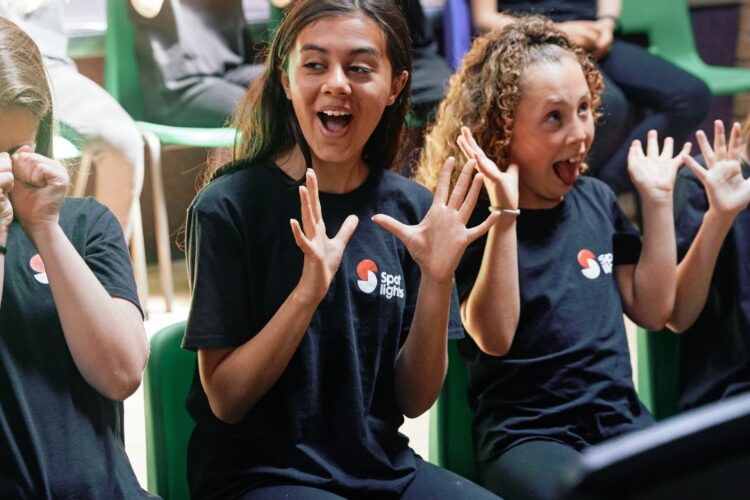


Musical Theatre for Kids: A Parent’s Guide
Somewhere between the third Lion King singalong in the car and the living room “performance” that required the whole family to sit down and clap on cue, most parents start to wonder: should we actually do something with this?
Musical theatre for kids is the answer more families are landing on, and honestly, it makes sense. It pulls singing, dancing and acting together into something children love turning up for week after week. But what surprised us (and surprises most parents) is how far the benefits reach beyond the stage. We’re not talking vague “it builds character” stuff. We’re talking measurable changes in confidence, creativity and how they handle themselves socially.
Below is everything we wish someone had told us when we first started looking into it.
Why Musical Theatre Matters for Kids
Most parents go in thinking that performing arts classes will be a nice weekend activity. Something to keep them occupied. What they don’t expect is how quickly it starts to change things at home and at school.
Confidence tends to shift first. Getting up in front of a room, even a small one with other kids they know, does something to how a child carries themselves. The ones who start off hiding behind your leg at parties? Give them a couple of terms and you’ll barely recognise them. They learn to project, to make eye contact, to just be comfortable being looked at. That carries over into school, into making friends, into everything really.
That’s just the start of it though. Here’s what parents keep telling us they notice:
- Teamwork that actually means something. You can’t put a show together if half the cast won’t cooperate. Kids work that out fast. They learn the magic of ensemble work in theatre, share the space, and actually collaborate rather than one child doing everything while the rest watch.
- Creativity and imagination. Every week brings something different. New songs, new characters to try on, choreography to muddle through. Their brains don’t get the chance to switch off.
- Proper friendships. There’s something about working towards a shared performance that bonds children in a way sitting next to each other in maths just doesn’t.
And this isn’t just feel-good stuff. A UCL study found that children who regularly take part in arts activities have notably higher self-esteem, and the effect was even stronger when parents got involved. TheRoyal Shakespeare Company also found teachers reporting genuine improvements in writing, emotional literacy and speaking when theatre was part of children’s lives.
What They Actually Learn in Class
What actually happens in a class? It breaks down into three parts. Drama, dance and singing.
Building confidence through drama gives children space to experiment. Improvisation, character work, getting comfortable with all eyes on you. The best schools keep it loose enough that even the nervous ones relax into it after a session or two. Nobody expects West End-level performances from a seven-year-old. The whole point is getting them comfortable thinking on their feet.
For older beginners, drama can be a way to try on different versions of themselves without it feeling so personal: one week they are a villain, the next week they are a hero, and they get to play with that in a safe space.
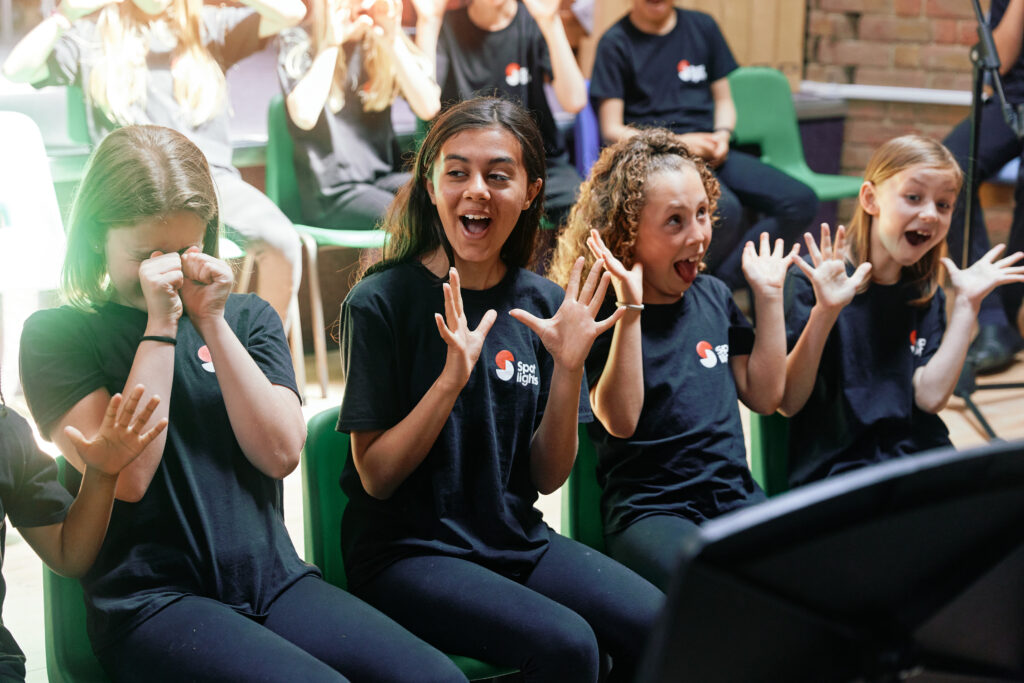
Dance is where the physical energy goes. Rhythm, coordination, learning a routine without crashing into each other. Could be a full musical theatre number, could be something more contemporary. Either way it burns off energy and teaches them to move with purpose. Also, and this is just a bonus, watching twenty six-year-olds try to do the same choreography at the same time is pure gold. Nobody nails it. Everyone has a great time.
Voice training surprises a lot of parents. It isn’t just about singing in tune (though that comes too). Projection, breath control, vocal warm ups, the basic confidence to open your mouth and actually be heard. For little ones on the quieter side, singing as part of a group can be a genuine turning point.
Here’s the bit that really catches parents off guard though. How much all of this feeds back into school:
- Focus and concentration improve because rehearsing takes discipline
- Writing and vocabulary get a boost (the 2024 UK Theatre report found 92% of students in theatre projects said it helped them academically)
- Willingness to speak up in class goes up, sometimes dramatically
- Resilience builds naturally because putting on a show means practising something until it clicks
It’s not just a fun extra. It’s doing genuine educational heavy lifting in the background.
Book A Free Trial
What You Can Do as a Parent
You don’t need to be a performer. Not even slightly. But showing up matters more than you’d think.
A few things that go a long way:
- Turn up to their shows and rehearsals. Children remember you being in that audience. Years later they’ll still bring it up. “You were in the front row.” “You clapped the loudest.” Those moments land harder than you’d expect.
- Ask about their week. Not in a grilling-them sort of way. More like… what was the best bit? What song are they working on? Did anything funny happen? Some weeks you’ll get a full rundown. Other weeks you’ll get “fine” and nothing else. Both are completely normal.
- Sort out the practical stuff. Getting them to class on time, making sure their kit’s ready, running through lines at home when they ask. It all adds up.
That same UCL research showed the self-esteem benefits were strongest when parents were regularly involved. You don’t need to know anything about theatre. Just pay attention to what they’re working on, show your face at their shows, and let them know you think it matters. That goes further than you’d think.
Taking Them to See a Show
If your child hasn’t seen live theatre yet, put it on the list. Even one trip to London’s West End can completely shift how they think about performing.
There’s a difference between watching something on a screen and being in the room where it’s happening. You can feel the music in your chest, the performers are right there, and there’s a kind of magic in the room that kids pick up on instantly. You’ll see it in their face the second the lights drop.
The West End has loads of family friendly musicals and some of the best kids theatre shows around:
| Musical | Ages | Themes | Venue |
| The Lion King | 6+ | Courage, Family | Lyceum Theatre |
| Matilda | 7+ | Empowerment, Education | Cambridge Theatre |
| Annie | 5+ | Optimism, Resilience | Currently on tour |
You can find musicals at the Theatre Royal Drury Lane and right across the West End, from big Disney productions to smaller family shows. There’s really something for young audiences of every age, adults included.
A few practical tips:
- Book a matinee if you can. Much easier if you’ve got toddlers or little ones in tow, and nobody has to deal with the late train home.
- Theatre tickets cost less than most people assume, especially over summer and school holidays when there are more events on and more seats to fill.
- For a first trip, you can’t go far wrong with the Lion King at the Lyceum Theatre. If your child is a bit older and likes their heroines with some attitude, Matilda near Charing Cross is a winner. Annie pops up on tour most years and works well for the younger end.
Getting Started at Spotlights Theatre School
If you’re in South East London or Kent and want somewhere to try, we’d point you towards Spotlights Theatre School. We take children from age 4 right through to 18, and classes are set up for absolute beginners as well as kids who have danced, sung or acted elsewhere before.
So if your child is 13 and suddenly announces they want to try musical theatre, they will not be the only one walking in for the first time.
Here’s how it works:
- Little Stars (ages 4-7) and Stars 1, 2 and 3 (ages 7-18) keep children with others at a similar stage
- Little Stars sessions are one and a half hours and Stars 1,2,3 are three hours covering drama, dance and singing, taught by professional choreographers, drama coaches and singing teachers
- Classes are capped at 20, so your child actually gets attention rather than being lost in a massive group
- End-of-term shows with proper costumes, sound and lighting give them real performance opportunities. The whole family comes along and the pride on those kids’ faces is something else
You can sign up for a free trial class to test the water or have a look at our classes and see what fits your week. It costs nothing to try!
Book A Free Trial
FAQs
What age is suitable for a child’s first musical?
It depends on the show and on your child, but generally from about age 4 or 5 you can start with shorter, family friendly shows that are designed for younger audiences. Disney shows like the Lion King tend to work well because kids already know the songs and the characters, so they’re not going in cold. The laughter, the music, the costumes. It all holds their attention in a way you might not expect. If you’re not sure, start with a matinee of something familiar and see how they get on.
How do I introduce my child to musical theatre if they’ve never seen a show?
Start at home. Play some soundtracks in the car, watch clips of iconic West End productions together, let them get curious on their own terms. When they start singing along or asking questions, that’s your cue. A trip to see live entertainment, even a smaller local production, can be the thing that tips them from interested to obsessed. Family friendly favourites like Annie or Matilda are great entry points because the stories are relatable and there’s plenty of joy and laughter built in. Those first experiences tend to create lasting memories, especially if the whole family goes together.
Is musical theatre just for kids who are already confident?
Not at all. Plenty of children who start classes are on the quieter side or feel a bit nervous about performing. That’s actually one of the reasons musical theatre works so well. It gives them a safe, supportive space to come out of their shell at their own pace. The group setting helps because they’re not doing it alone. Within a few weeks most parents notice a shift. Their child starts speaking up more, making eye contact, carrying themselves a bit differently. Confidence isn’t a prerequisite. It’s the outcome.
Spotlights Performing Arts Classes
We have a range of dance, drama and singing classes for children ages 4-18 years.
Find the best performing arts class for your child!